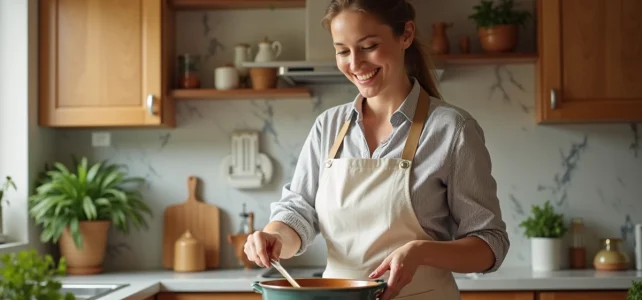
Everyday family cooking is based on a principle that we systematically apply: a common base developed into quick variations. This approach responds to the rise of mixed meals, where a single dinner must satisfy different diets within the household. Easy and delicious recipes are not simplistic recipes, but preparations whose structure allows for adaptation without multiplying pots and pans.
Family recipes with a common base: the quick variations method
The Cetelem Observatory has highlighted a clear increase in mixed meals in French households. A dinner now combines an omnivorous dish and a vegetarian or meat-free version for some family members. This reality changes the way we conceive a family menu.
We recommend structuring each meal around a common base that everyone can personalize in under five minutes. A seasonal vegetable gratin, for example, comes out of the oven in a single batch. One part receives shredded chicken, while the other gets roasted chickpeas. The result: two dishes, one main preparation.
This logic works particularly well with saucy dishes, gratins, and composed salads. A coral lentil dahl serves as a vegetarian base that can be enriched with pieces of grilled chicken for those who wish. Among the recipes on the Mon Blog Cuisine site, several preparations follow exactly this principle of variation from a unique base.
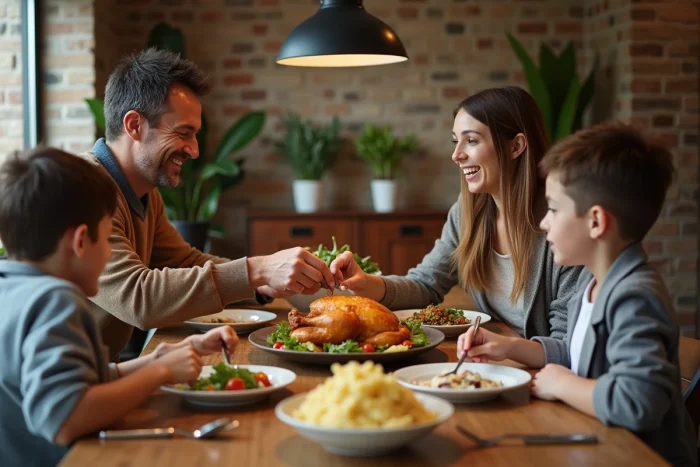
Three versatile bases to master
- Homemade tomato sauce with onion, garlic, and blended vegetables: it works for both pasta and a fish dish or shakshuka, and it freezes without losing texture
- Vegetable pancake batter (grated zucchini, carrot, or sweet potato bound with an egg and flour): can be made in a cold version for lunchboxes or hot as a side dish
- Rice or grains cooked in large quantities: base for a chicken stir-fry with vegetables that evening, then a composed salad the next lunchtime
Legumes and vegetables in family cooking: integrate without forcing
The ANSES report on the nutrition of children and adolescents recommends increasing the intake of vegetables and legumes. This recommendation has led to a multiplication of recipes incorporating lentils, chickpeas, or beans in formats accepted by children: blended soups, burgers, patties.
The blended texture remains the main lever for acceptance among children. A coral lentil velouté with coconut milk is accepted where a dish of whole lentils is rejected. We observe the same phenomenon with chickpeas: reduced to hummus or incorporated into a savory pancake batter, they become invisible.
The gratin also works as a vehicle. Mashed white beans mixed with a light béchamel, topped with golden breadcrumbs, produce a delicious family dish without the legume being identifiable. The preparation takes no more than twenty minutes, excluding oven cooking.
Common mistakes with legumes
Serving whole and plain legumes to children who are not used to them leads to lasting rejection. It is better to start with small quantities integrated into a dish they already enjoy.
Soaking dried legumes remains a real barrier during the week. Coral lentils and split peas, which cook without prior soaking, are allies for busy evenings. Canned chickpeas and red beans, simply rinsed, offer the same flexibility.

Family batch cooking: realistic organization for the week
Preparing in a single session the components of three to four meals reduces mental load much more than the daily search for inspiration. Family batch cooking is not about cooking five complete dishes on Sunday, but about preparing reusable elements.
A two-hour session allows for the production of a tomato sauce, a batch of roasted vegetables, a cooked grain, and a protein (roast chicken, hard-boiled eggs). These components can be assembled differently each evening: wraps on Monday, composed salad on Tuesday, gratin on Wednesday.
What batch cooking does not solve
Meal kits like cooking baskets (Quitoque, HelloFresh) meet a different need. The ANIA survey shows that families use them less to eat better than to avoid the mental load of searching for meal ideas. Batch cooking, on the other hand, assumes that the menu has already been decided.
The two approaches complement each other: batch cooking covers the evenings when one has anticipated, while the meal kit takes over when planning has failed. Neither works alone for the long term for most households.
Seasonal recipes: adapting family dishes to market vegetables
A successful family dish relies on seasonal ingredients, which cost less and taste better. Stuffed zucchini works in summer, while leek gratin works in winter. This seasonal rotation avoids monotony without requiring imaginative effort.
Five seasonal vegetables are enough to cover a month of varied menus. In autumn, squash, leeks, mushrooms, cauliflower, and carrots can be made into soups, gratins, stir-fries, and savory tarts. The seasonal constraint simplifies the choice instead of complicating it.
ADEME data on food waste shows that households throw away less when cooking from fresh products purchased in appropriate quantities. Buying three different vegetables at the market and building the menu around them produces less waste than a supermarket cart filled without a precise list.
Everyday family cooking becomes smoother as soon as one stops searching for the perfect recipe for each evening. A solid base, seasonal vegetables, a few legumes in reserve, and a weekly preparation session cover most dinners without stress or waste.