In some regions, rolling the soil after sowing promotes rooting, while elsewhere it can hinder germination in clayey or waterlogged terrain. Misjudgments about the ideal timing or the pressure applied by the roller often lead to excessive compaction and the development of weeds. Ignoring the specificity of the soil or local climate frequently results in disappointing outcomes.
The success of a lawn directly depends on adhering to a few precise rules, rarely mentioned in general guides. Adjustments, sometimes minimal, can permanently alter the quality of the resulting turf.
Understanding the role of rolling after sowing: a key action for the success of your lawn
Rolling a freshly sown lawn is not an automatic action. It is a game-changing gesture, as it affects the density, uniformity, and vigor of your future grass. The objective is clear: bring each seed closer to the soil so that it finds the moisture and stability necessary for germination. This direct contact also protects the seeds from the whims of the wind, excessive watering, and foot traffic.
Forgetting to roll, or miscalculating the dosage, risks a sparse lawn, vulnerable to weeds and subject to uneven growth. The roller, handled with discernment, shapes the surface, eliminates air pockets, and compacts the soil just enough. The seeds thus benefit from a uniform bed, promoting consistent emergence and limiting competition from weeds. Moisture is better distributed, resulting in a more vigorous emergence.
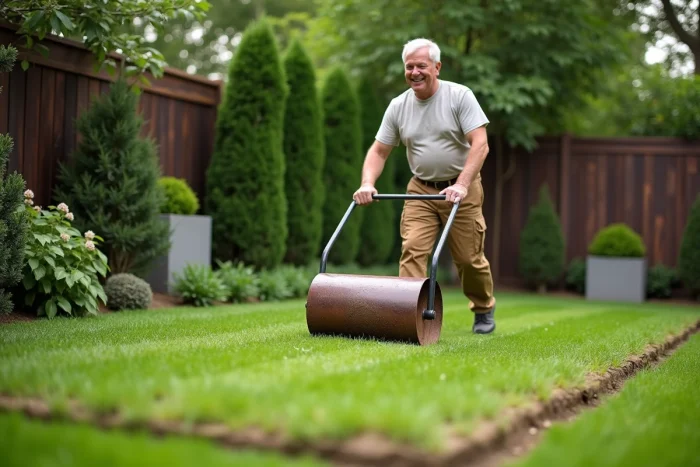
However, be careful not to succumb to the temptation of using a roller that is too heavy, which crushes the soil instead of structuring it. Excessive compaction blocks water circulation and compromises root development. Choose a roller suitable for your surface and soil texture: water or sand models allow for precise weight adjustment. On light terrain, a single pass is enough to structure the whole area, while heavy soils require a lighter touch and increased vigilance.
To delve deeper into these practices and obtain tailored advice for each configuration, the file lawns, sowing, and rollers on Spot Jardin offers a range of practical tips. Every step, from choosing the roller to managing moisture, is crucial for transforming the sowing into a dense and resilient turf.
When and how to choose the right time to roll your lawn?
The right timing to roll your grass is not dictated by the calendar, but observed on the ground. After sowing, it is important to watch for the moment when the soil is soft, neither waterlogged nor dry. Too much water, and the roller suffocates the soil, trapping the seeds under a compact crust. Too little, and the seeds remain on the surface, exposed to the elements and birds.
The spring and autumn seasons generally offer the best conditions: mild temperatures, constant humidity, no frost in sight. Rolling on frozen ground cracks the structure, delaying emergence. The ideal scenario: wait for a light rain or gentle watering, then check that the soil leaves a mark underfoot, without sticking to shoes.
To choose the right moment, keep the following criteria in mind:
- soil that is neither waterlogged nor too dry or dusty
- no frost or extreme heat forecasted
- sufficient moisture to allow water to infiltrate without saturating the soil
- seeds just covered, still visible on the surface
The very nature of the terrain influences the choice: clayey soil, which retains moisture more, requires more caution than sandy terrain, which drains better. Identify bare spots, often signs of excess water or rolling too early. Observing and adjusting the method according to the soil’s behavior remains the best way to achieve uniform emergence without compromising the substrate’s structure.
Practical techniques and tips for effective rolling without damaging the lawn
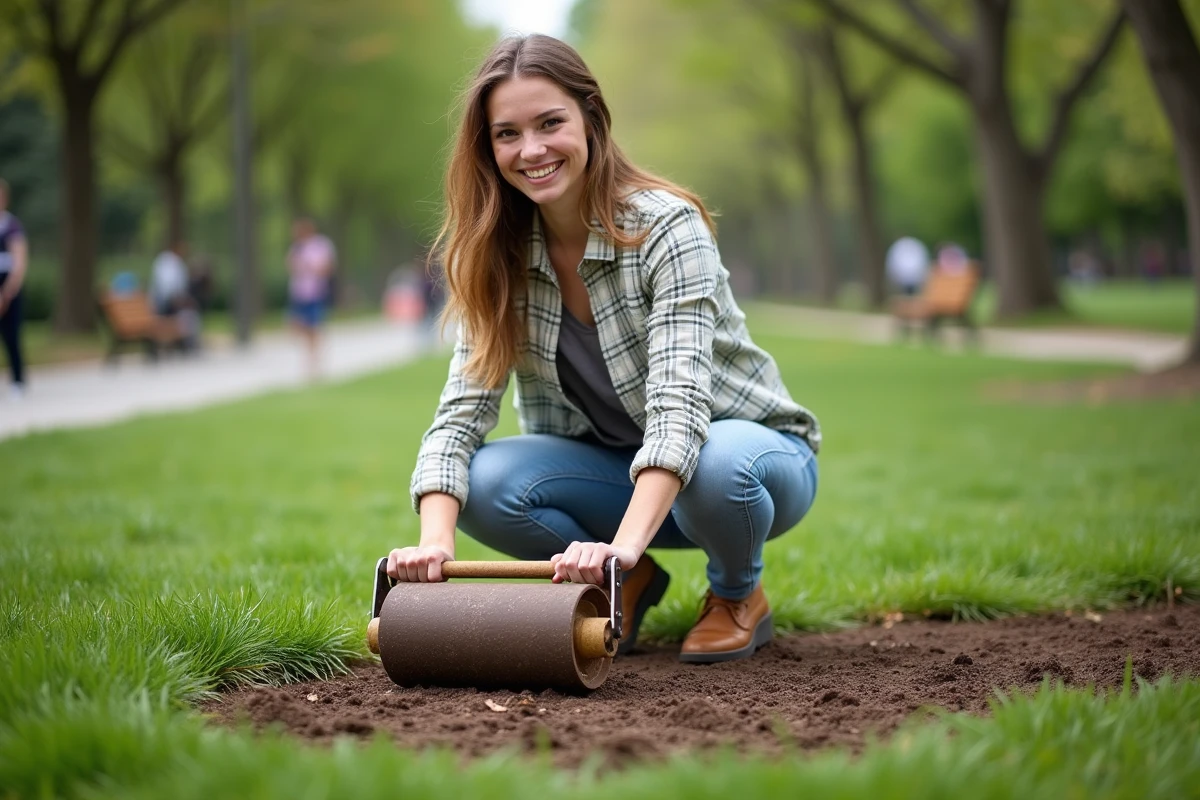
To successfully roll without harming the lawn, start by choosing a roller suitable for the size and nature of the terrain. Water or sand models allow for precise weight adjustment, which is valuable depending on whether the soil is light or more compact. Intervene when the soil is slightly moist: moderate pressure is enough to fix the seeds without crushing the soil’s life.
Proceed methodically: start with the edges, then move forward in parallel bands. Cross the passes to achieve a uniform surface. In fragile areas or where sowing is sparse, slow down and lighten the pressure. A full cast iron or steel roller, which is heavier, is only suitable for perfectly leveled clay soils, lest it suffocate young shoots on lighter terrains.
On a brand-new lawn, limit yourself to a single pass. If traces or depressions persist, a second perpendicular pass, lighter, is enough to correct the defects. Aim to achieve a uniform turf, avoiding sparse areas and maximizing seed uptake in the soil.
After rolling, monitor the watering: prefer fine and regular water applications that do not cause runoff. Leave the lawn undisturbed until the first mowing: then only remove the top third. This action consolidates the lawn’s structure and prepares the ground for future mowings and maintenance. Patience and precision make all the difference between a temporary lawn and a solid turf, ready to withstand time and use.