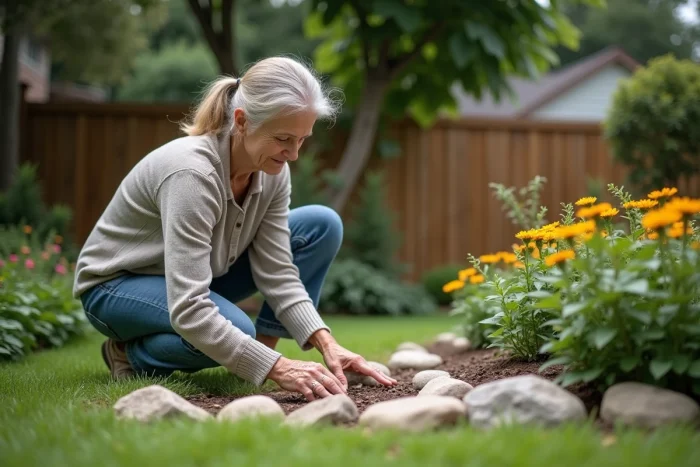
A bed that breaks free from traditional borders is not a gardener’s whim, but a manifesto of balance between rigor and freedom. Some enthusiasts have understood this for a long time: to structure without overloading, to reveal the essential, to let life breathe. Here, the main tool is not the hammer but the eye, and each plant has its part to play.
Mastering this technique requires a careful selection of plants and thoughtful organization. These are concrete tips, sometimes overlooked, that prevent the bed from spreading without limit. By opting for simple solutions, we shape a structured and sustainable space, never yielding to the ease of ready-made borders.
Structuring a bed without a border: what are the stakes for the aesthetics and durability of the garden?
Choosing a bed without a border changes the relationship to the entire garden. Forget the sharp separation from the lawn or path: the gaze flows, the boundary becomes flexible, almost imperceptible. The challenge, for those who love to create, is to maintain a clear, recognizable line without ever falling into artifice. Defining a bed without a border carefully offers the space a natural elegance that intrigues and seduces.
The choice of plants matters more than ever. Compact, low, or creeping species are favored, as they draw the boundary themselves. Mixing textures, colors, and heights allows us to outline the contours of the bed right on the ground. The whole breathes, evolves throughout the year, while maintaining a readable coherence.
Without a physical border, the stability of the garden depends on well-worked, leveled soil, ready to contain the exuberance of grass or wandering roots. Regular maintenance is essential: a spade, some weeding, and the silhouette of the bed remains sharp. This action, far from being a chore, becomes the common thread of a living garden, where every intervention counts.
Here’s what to keep in mind to succeed with this approach:
- Anticipate the development of plants and adjust maintenance actions throughout the seasons.
- Structure according to the nature of the soil and the interactions between species, never neglecting soil observation.
- Favor the coherence of the bed by respecting both soil health and the balance of life.
What natural and creative alternatives are there to effectively define your beds?
Defining a bed without resorting to classic borders opens the door to unexpected creativity. The garden organizes itself differently: sometimes, the boundary is simply read in the transition between bare soil and the carpet of grass. This play of textures suggests contours without ever freezing them, giving the whole a discreet elegance.
Some choose geotextile, placed under mulch or gravel. This discreet fabric blocks the progression of invasive weeds and keeps the line of the bed clearly visible, while remaining invisible to the naked eye. Here, effectiveness comes through discretion and simplicity.
Others rely on wisely chosen plants. Creeping perennials, low herbs, or flexible grasses draw the transition between planted space and lawn. These species, in addition to bringing diversity, form natural boundaries that change with the seasons.
In more contemporary gardens, corten steel sometimes makes an appearance. Used sparingly, it draws a fine, solid line without ever overshadowing the vegetation. It’s a subtle detail that highlights the structure while preserving the spirit of the place. The result depends primarily on the gardener’s skill and eye.
The most effective alternatives are as follows:
- The use of ground-cover perennials or grasses to establish a flexible separation.
- The occasional use of geotextile to control the growth of unwanted plants.
- The discreet integration of corten steel to define without rigidifying.
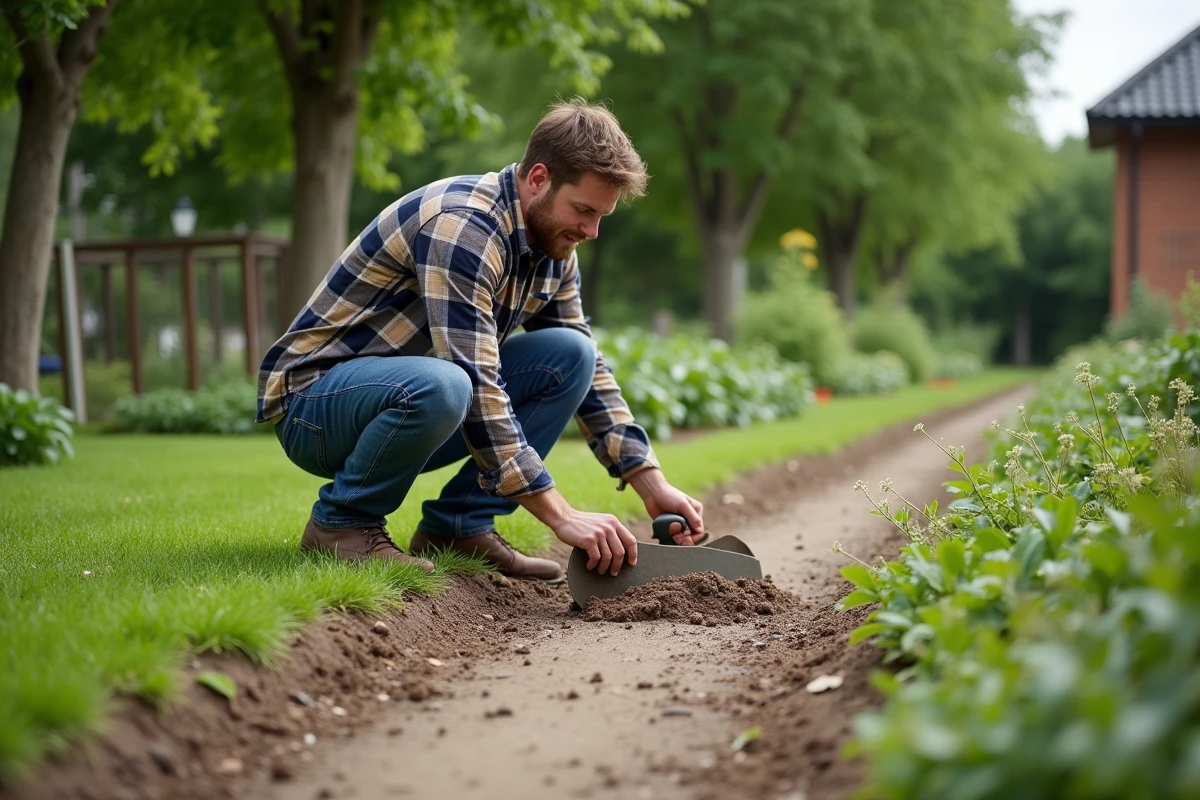
Concrete tips for maintaining clear and harmonious contours throughout the seasons
The key to maintaining the sharpness of the bed is the regularity of actions. Twice a year, a precise pass with a half-moon or spade restores the outline to its clarity. This simple ritual is enough to prevent the lawn from encroaching and to keep a flawless structure, without anything artificial.
Organic mulching proves to be a trusted ally. Bark, dead leaves, or dried grass clippings are laid at the base of the plants, slowing the regrowth of wild grasses and marking the separation from the lawn. This mulch nourishes the soil, promotes underground life, and gives the bed a neat, never frozen appearance.
Seasonal actions for maintenance
Here’s how to pace the year for well-defined beds:
- In spring, rework the boundary and renew the mulch.
- In summer, keep an eye on the advance of the grass and trim any overhanging plants.
- In autumn, collect leaves, clean up debris, and adjust the boundaries if necessary.
- In winter, inspect the bed, adjusting the soil or mulch if needed.
By choosing ground-cover plants or low perennials, maintenance is simplified and the stability of the contours is ensured. These well-established plants naturally outline the boundary between lawn and bed, extending the lifespan of your landscaping and lightening the long-term work. Structuring without confining means granting each space the share of freedom and order that makes the charm of a thoughtfully designed garden.