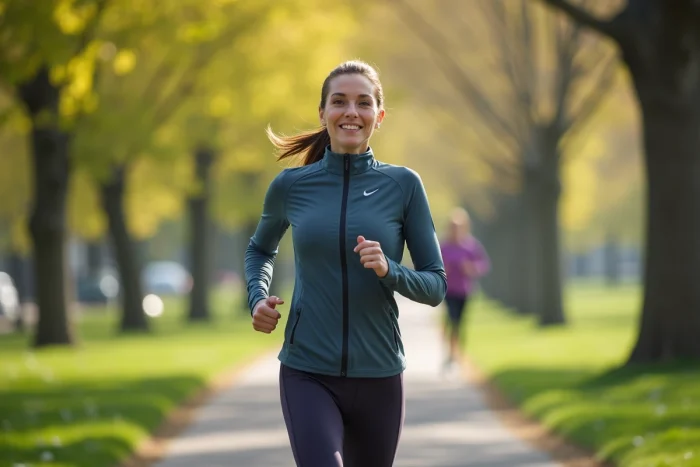
Less than 20% of women report engaging in regular physical activity in France, according to the latest national barometer. Some sports federations still impose strict quotas or mixed categories, which have long been criticized by women’s sports associations. However, initiatives promoting diversity and inclusion are multiplying on the ground, through mentoring networks, reserved competitions, or financial support schemes. Resources exist, sometimes unknown, and atypical paths are increasing, showing that barriers are neither fixed nor insurmountable.
Women’s sports today: observations, challenges, and developments
In France, the reality of women’s sports remains mixed. According to the 2022 Rallying Signal, one in two teenage girls does not play sports regularly. This figure masks a multitude of obstacles: pressure of image, lack of confidence, persistent prejudices. Poorly thought-out schedules, discouraging prices, and programs that do not take expectations into account add to this. From adolescence, girls face a glaring absence of role models and invisibility in the collective sports narrative. For women from minorities or the 2ELGBTQQIA+ community, social barriers and the scrutiny of their bodies add to the equation.
The place of women in sports remains to be fully conquered. Leadership roles are almost always occupied by men, even though female athletes are now asserting themselves on the front stage, whether on the athletics tracks or elsewhere. Gender stereotypes cling to them, hindering progress. In gyms, harassment continues to thrive. As for injuries, they are more frequent when infrastructures or coaching are not designed for women.
Another long-ignored point: the menstrual cycle. It influences endurance, recovery, and available energy according to the phases: follicular, luteal, ovulation, or menstruation. Estrogens provide muscle protection, but certain situations, such as endometriosis, pregnancy, or illnesses like cancer, require adaptations. Rather than being seen as a weakness, this complexity calls for adapting training and support to the reality of women.
For those who want to find suitable references for their practice, carnetdesportive.com offers a space dedicated to health and sports for women: everything from choosing activities to nutrition is covered. Today, the diversity of trajectories and needs paves the way for a collective dynamic, driven by access to information, solidarity, and the demand for equality.
What sources of inspiration to thrive in sports practice?
Women’s sports practice is enriched by journeys, testimonies, and figures that are changing the game. Inspiring role models, whether they shine on television or express themselves in books, are changing the landscape for many women. Penny Oleksiak, an award-winning swimmer, Kadeisha Buchanan, an essential defender in women’s soccer, Marielle Thompson, queen of ski cross: each, in her own way, embodies determination, boldness, and the freedom to move forward for oneself.
Inspiration is not limited to the podiums. Authors, experts, and adventurers share how the body and mind can emancipate. The books of Simone de Beauvoir, Mona Chollet, or Titiou Lecoq decode the mechanisms that have long relegated women to the sidelines of sports but also propose ways to reclaim the field. Others, like Lucie Azema, Annabel Abbs, and Chloë Lanthier, recount unique experiences, between self-discovery and feminist reflection.
Here are some resources that broaden horizons and encourage long-term affirmation:
- Podcasts, documentary series, and social media shares disseminate new narratives and amplify women’s voices.
- Collective initiatives celebrate the diversity of bodies, the joy of movement, and the strength of the collective.
Thanks to the plurality of these resources, everyone can invent their own path, question norms, and chart their course. The visibility of female athletes and the richness of women’s voices, whether found among champions, authors, or anonymous enthusiasts, reinforce the legitimacy of all to thrive in sports.
Initiatives, networks, and resources to support women in their sports journey
The dynamism of women’s sports is supported by a multitude of initiatives and networks that accompany every step of women’s sports journeys. In France, International Women’s Day has become a significant moment each year, mobilizing clubs, federations, and institutions to highlight the role of women in sports.
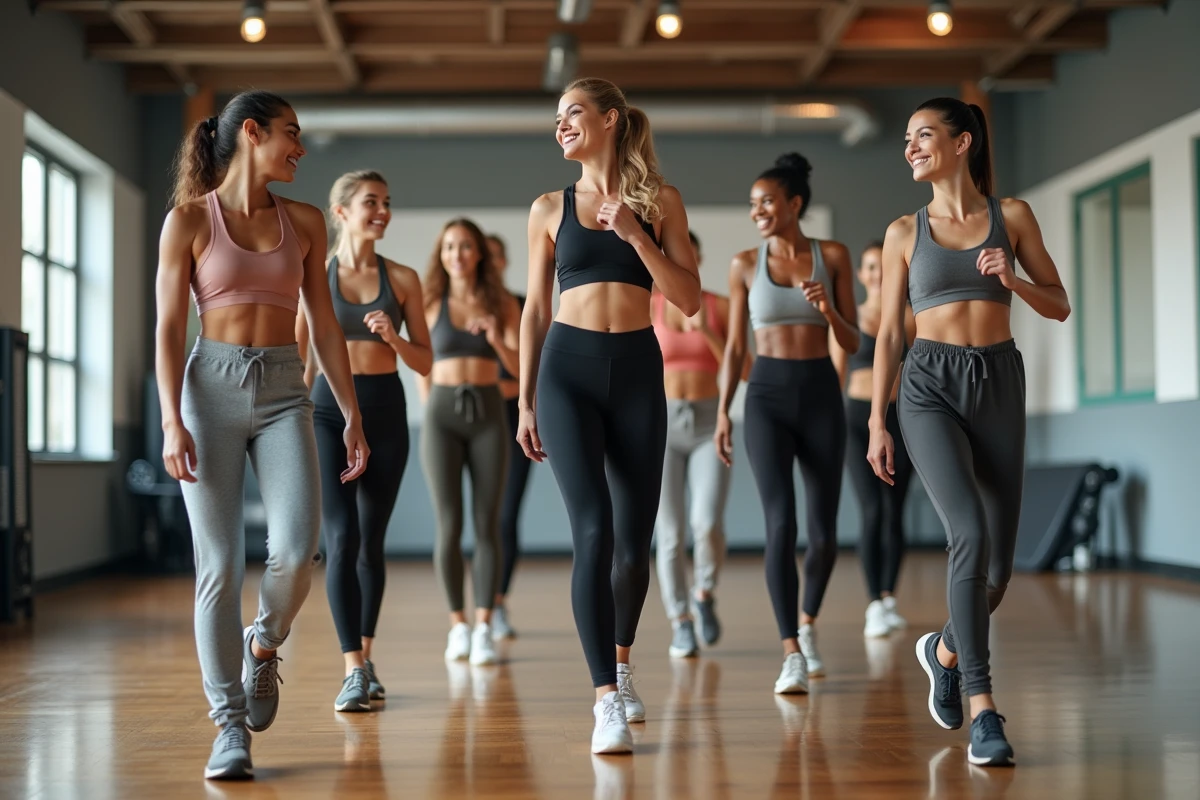
In many fitness centers, the emergence of women-only spaces marks progress: increased confidence, a regained sense of security. For many, this was a long-standing expectation in the face of insecurity risks or inappropriate behaviors. Even in terms of equipment, there is a rise in accessories designed for female practitioners, from sports bras to compression socks, to meet needs for support, comfort, and recovery.
Networks, resources, and coaching
Various initiatives contribute to strengthening the movement:
- Women’s sports coaching is on the rise, with programs tailored to the menstrual cycle, physiology, and the diversity of body types.
- Training and networking programs, like the Women’s Leadership Circuit, promote women’s access to leadership positions in sports.
- The favored disciplines are varied: gymnastics, dance, walking, swimming, fitness, yoga, Pilates, weightlifting, or strength sports.
This abundance of resources is now shaping a universe where every woman can envision her sports practice without having to erase her uniqueness or her history. Doors are opening, paths are multiplying: it is up to each woman to seize the momentum and define her trajectory.